THREE:IRISH PRISONERS LIBERATED DURING LORD MULGRAVE'S PROGRESS. (See p. 396.)This was immediately made evident. The treaty was concluded on the 4th of April, 1769, and the first news was that Hyder had quarrelled with the Mahrattas, and called on the Presidency of Madras to furnish the stipulated aid. But the Presidency replied that he had himself sought this war, and therefore it was not a defensive but an offensive war. The Peishwa of the Mahrattas invaded Mysore, and drove Hyder to the very walls of Seringapatam, dreadfully laying waste his territory. Hyder then sent piteous appeals to his allies, the British, offering large sums of money; but they still remained deaf. At another time, they were solicited by the Mahratta chief to make an alliance with him, but they determined to remain neutral, and left Hyder and the Peishwa to fight out their quarrels. In 1771 the Mahrattas invaded the Carnatic, but were soon driven out; and in 1772 the Mahrattas and Hyder made peace through the mediation of the Nabob of the Carnatic, or of Arcot, as he was more frequently called. Hyder had lost a considerable portion of Mysore, and besides had to pay fifteen lacs of rupees, with the promise of fifteen more. The refusal of the English to assist him did not fail to render him more deeply hostile than ever to them.
FORE:Sir John marched out of Edinburgh for the north on the very day that the standard of the Stuarts was erected in Glenfinnan, the 19th of August. On the following day he continued his route from Stirling, accompanied by one thousand five hundred foot, leaving, very properly, the dragoons behind him, as of no service in the mountains, nor capable of finding forage there. He then continued his march towards Fort Augustus, which he hoped to make the centre of his operations, and then to strike a sudden and annihilating blow on the handful of rebels. At Dalwhinnie he heard that the rebels now mustered six thousand, and that they meant to dispute the pass of Corriarrick, lying directly in the line of his march towards Fort Augustus. This Corriarrick had been made passable by one of General Wade's roads, constructed after the rebellion of 1715, to lay open the Highlands. The road wound up the mountain by seventeen zig-zags or traverses, and down the other side by others, called by the Highlanders the Devil's Staircase. Three hundred men were capable, much more three thousand, of stopping an army in such a situation, and Cope called a council of war. At length it was agreed that they should take a side route, and endeavour to reach Inverness and Fort George. The resolve was a fatal one, for it gave the appearance of a flight to the army, and left the road open to Stirling and the Lowlands.A succession of battles now took place with varying success, but still leaving the Allies nearer to Paris than before. If Buonaparte turned against Blucher, Schwarzenberg made an advance towards the capital; if against Schwarzenberg, Blucher progressed a stage. To check Schwarzenberg whilst he attacked Blucher, Napoleon sent Oudinot, Macdonald, and Gerard against Schwarzenberg; but they were defeated, and Napoleon himself was repulsed with severe loss from Craonne and the heights of Laon. But Buonaparte getting between the two Allied armies, and occupying Rheims, the Austrians were so discouraged that Schwarzenberg gave orders to retreat. The Emperor Alexander strenuously opposed retreat; but the effectual argument was advanced by Lord Castlereagh, who declared that the moment the retreat commenced the British subsidies should cease. A sharp battle was fought on the 20th of March, between Schwarzenberg and Napoleon, at Arcis-sur-Aube, and Napoleon was compelled to retreat. Blucher, who had received the order to retreat from Schwarzenberg, had treated it with contempt, and replied to it by his favourite word, "Forwards!" Napoleon had now to weigh the anxious question, whether it was better to push on, and stand a battle under the walls of Paris, with his small, much-reduced force, against the Allies, and with the capital in a state of uncertainty towards him¡ªor to follow and harass the rear of the enemy. He seems to have shrunk from the chance of a defeat under the eyes of his metropolis, and he therefore, finding a Prussian force in Vitry, crossed the Marne on the 22nd of March, and held away towards his eastern frontiers, as if with some faint, fond hope that the peasantry of Franche Comt¨¦ and Alsace might rise and fly to his support. But no such movement was likely; all parts of France were mortally sick of his interminable wars, and glad to see an end put to them. The Allies had now taken the bold resolve to march on Paris and summon it to surrender.
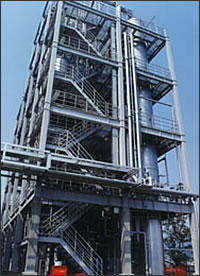
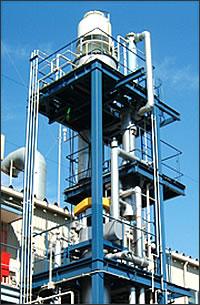
Methanol refinement systems, amyl alcohol refinement systems, ethanol refinement systems, hexanol distillation systems, propanol refinement systems, cyclohexanol distillation systems, isopropanol dehydration systems, ethylene glycol recovery systems, and butanol distillation systems.
FORE:With these inglorious events closed the long reign of George III. Indeed, he had passed away before they were brought to their conclusion. He died on the 29th of January, 1820, in the eighty-second year of his age, and the sixtieth of his reign. Only six days previously had died his fourth son, the Duke of Kent, in his fifty-third year. But the duke had not departed without leaving an heir to the Throne in the Princess Victoria, who was born on the 24th of May, 1819. Could the old king have been made sensible of these events, there were others which showed that his line, which of late had appeared likely to die out in one generation, notwithstanding his numerous family, was again giving signs of perpetuation. On the 26th of March, 1819, a son had also been born to the Duke of Cambridge, and a son to the Duke of Cumberland on May 27th of the same year, afterwards King of Hanover.
Hexane distillation systems, tall oil distillation systems, benzene distillation systems, lubricating oil refinement systems, xylene-free distillation systems, low-boiling gas distillation systems, ethylbenzene recovery systems, fusel oil distillation systems, naphthalene distillation systems, propylene recovery systems, and turpentine oil distillation systems.
FORE:The growth of material wealth during this reign had in no degree improved the condition of the working class in any proportion to that of other classes. Landlords had greatly raised their rents, and farmers, by the high price of corn and other provisions, had grown comparatively rich, many very rich. The merchants and master manufacturers had shared liberally in the benefits of a vastly increased commerce, and the wonderful spread of manufactures; but the working manufacturers, between the high price of corn and meat, and the lowness of their wages, were in a miserable condition, and frequently, as we have seen, were driven to riot and insurrection. The handloom weavers were swamped by machinery, and those working the machinery were living in wretched houses, and in a most neglected and insanitary condition. Before the first Sir Robert Peel introduced his Bill for reforming the hours and other regulations of cotton mills, many of these worked night and day, one gang, as it was called, succeeding another at the spinning-jenny, in hot, ill-ventilated rooms. Apprentices were purchased of parishes, either children of paupers, or orphans of such, and these were kept by mill-owners, and worked long hours, one gang having to quit their beds in the morning for another gang of these poor unfortunates to turn into them. The agricultural labourers were little better off. Their habitations were of the worst description, though squires' kennels on the same estates were equal, in all sanitary conditions, to tolerable mansions. Their wages remained only some eight or ten shillings a week¡ªwhen the wheat which they had raised was one hundred and thirty shillings per quarter, and a stone of flour of fourteen pounds cost a gold seven-shilling piece. This drove them in shoals to the workhouse, and produced a state of things that is hardly credible. Their mental and moral condition was equally deplorable. Education, either in town or country, was scarcely known. There was not a school in all the swarming region[158] of Whitechapel, and many another equally poor and populous region of London, much less in country towns and agricultural parishes. It was a settled maxim amongst the landed gentry, that education, even of the most elementary kind, would totally destroy the supply of servants; and it was gravely stated in Parliament that the plot of Thistlewood was owing to the working classes being able to read.
Ether distillation systems, camphor distillation systems, epichlorohydrin distillation systems, aniline distillation systems, dioxane refinement systems, acetonitrile distillation systems, furfural refinement systems, formalin distillation systems, cyclohexane distillation systems, monoethanolamine rectification systems, polyglycol ether distillation systems, dimethylformamide recovery systems, acrylic glycol ether distillation systems, acrylonitrile refinement systems, acetone recovery systems, pyridine distillation systems, methyl ethyl ketone recovery systems, picoline distillation systems, methyl isobutyl ketone recovery systems, and acetaldehyde recovery systems.